‹ BackNewsindustrial policy

industrial policy

Anhui
2026-09-28 09:09:11

Li Lecheng’s Move to Anhui Meets a Province Shifting From Picking Companies to Building Industries

Li Lecheng was still serving at China’s Ministry of Industry and Information Technology on Sept. 20, where he chaired a roundtable with eight small and medium-sized companies from fields including artificial intelligence, commercial space and quantum technology. At that meeting, the ministry said support for high-quality companies should move away from a passive application-based model and toward proactively identifying firms earlier, then addressing bottlenecks in application scenarios, financing and industrial-chain coordination before they become larger problems. Three days later, on Sept. 23, Li left the ministry to become Party secretary of Anhui province. The personnel move, as described by Xinhua, was made by the central authorities based on work needs and the actual requirements of Anhui’s leadership team. But the timing also overlaps with a turning point in Anhui’s industrial development. The province has already built scale in autos, new energy vehicles and semiconductors, with ChangXin Memory-related growth helping Hefei’s integrated circuit output rise from about 18 billion yuan in 2016 to 151.4 billion yuan in 2025. At the same time, Anhui is trying to push earlier into sectors that still lack clear champions, including quantum technology, fusion, brain-computer interfaces, embodied intelligence, biomanufacturing and aerospace information. The article argues that Anhui’s next challenge is no longer just attracting a standout company. It is building the bridge from lab results to pilot production, first orders and mass manufacturing, and turning policy tools, funds and application scenarios into real industrialization.

250
Li Lecheng’s Move to Anhui Meets a Province Shifting From Picking Companies to Building Industries
China manufac
2026-09-03 10:28:12

Reuters-highlighted trend sees foreign tech investors and founders heading to China to study industrial speed

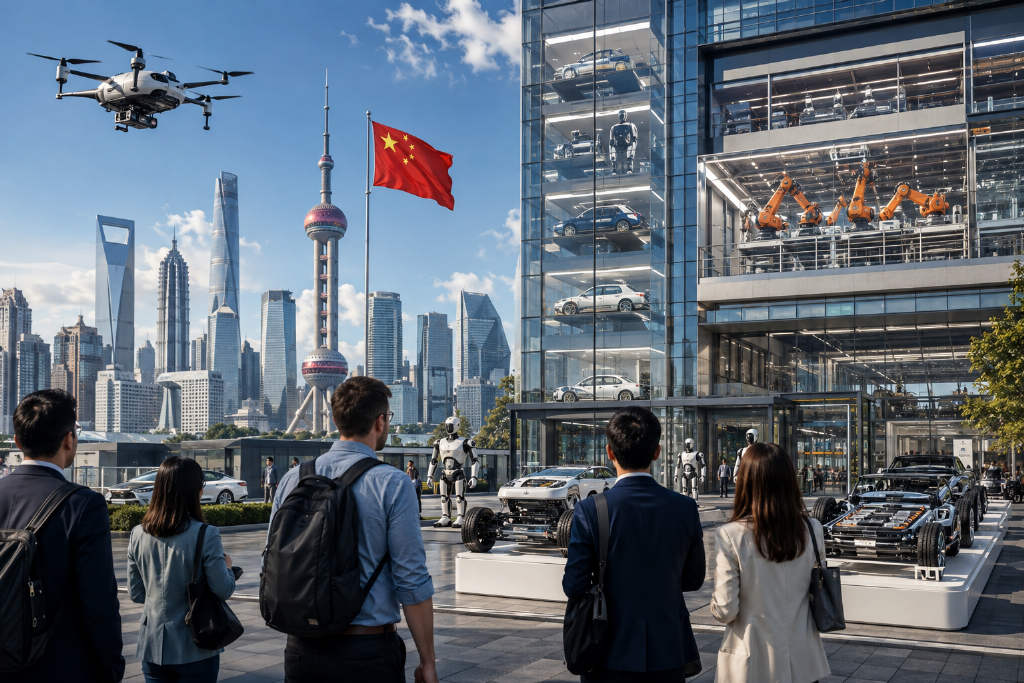
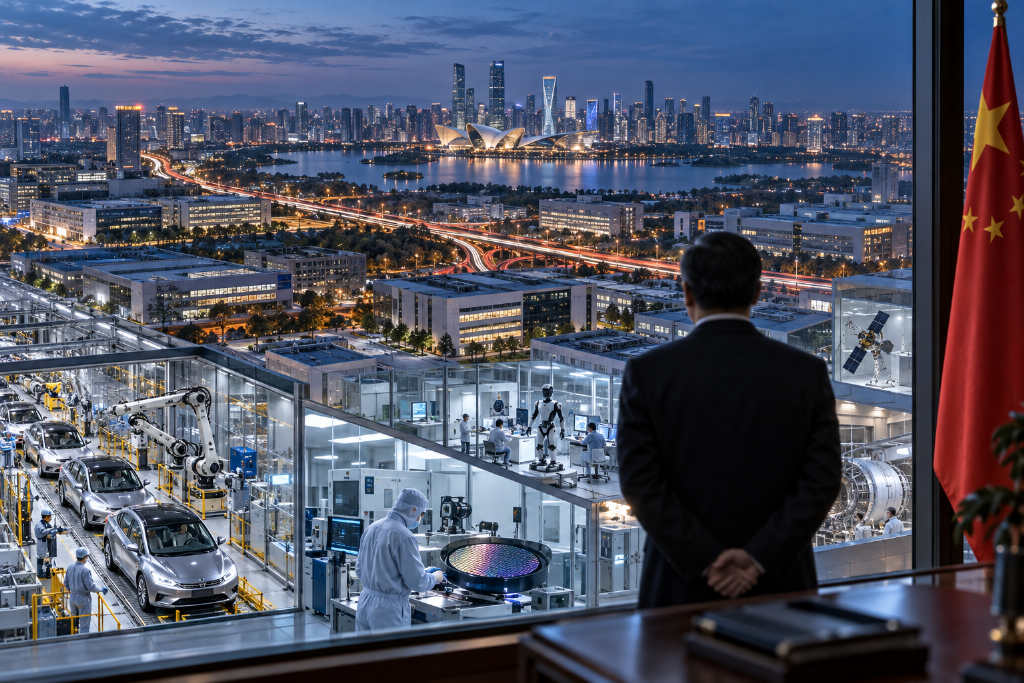
A growing number of overseas investors, founders, and corporate executives are traveling to Shenzhen, Hangzhou, Shanghai, Beijing, and Hefei to inspect Chinese artificial intelligence, robotics, electric vehicle, and advanced manufacturing companies, according to a Sept. 3 Reuters report cited in the article. What they are trying to understand is not simply how China manufactures at low cost, but why Chinese technology companies can turn ideas into products so quickly. The piece argues that global attention is shifting from China’s historical role as a low-cost manufacturing base to its emergence as an industrial network built for rapid iteration. It points to China’s near-30% share of global manufacturing output, its dominant position in electric vehicles and battery materials, and its scale in industrial robots and consumer drones. Shenzhen is described as a high-density industrial cluster where engineers, suppliers, tooling, logistics, and testing resources sit close enough to compress development cycles. The article also uses Tesla’s Shanghai gigafactory and BYD’s 2026 sales and overseas revenue figures to show how supply chains, engineering depth, and production scale are reshaping how capital may value technology companies. At the same time, it stresses that this does not mean China has overtaken the United States across all areas of technology, especially in advanced AI chips, foundational software, scientific instruments, and frontier research. The central argument is that the next phase of competition may be defined by industrialization speed — how fast a new technology can become a stable, scalable commercial product.

930
Reuters-highlighted trend sees foreign tech investors and founders heading to China to study industrial speed
Hefei model
2026-08-18 11:55:08

Changxin’s IPO thrust Hefei’s state capital strategy into focus as paper gains topped RMB 1 trillion

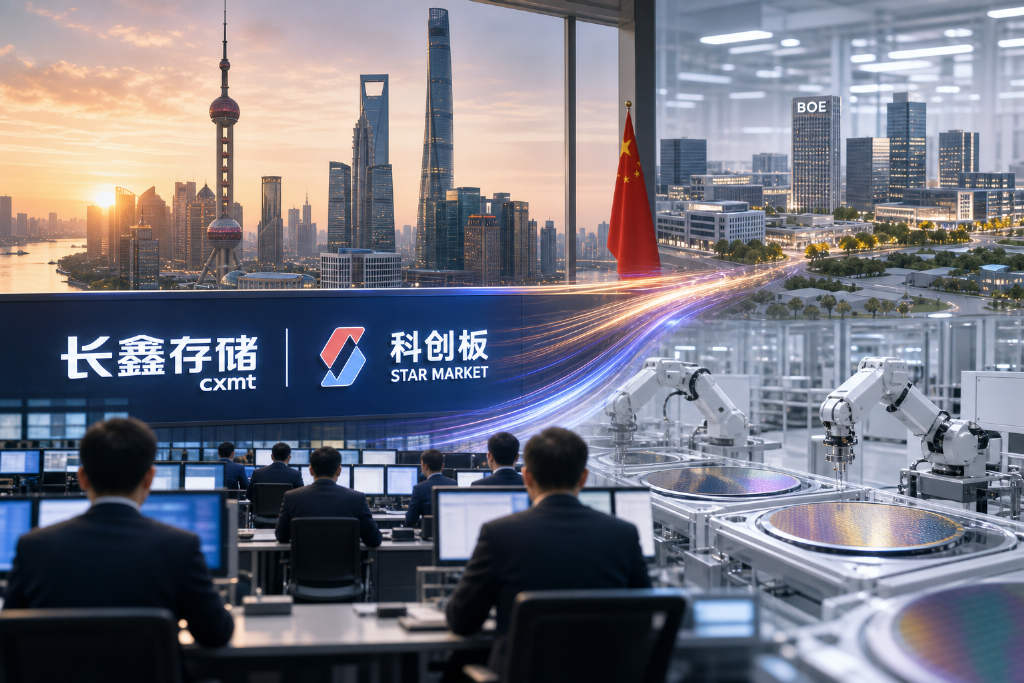
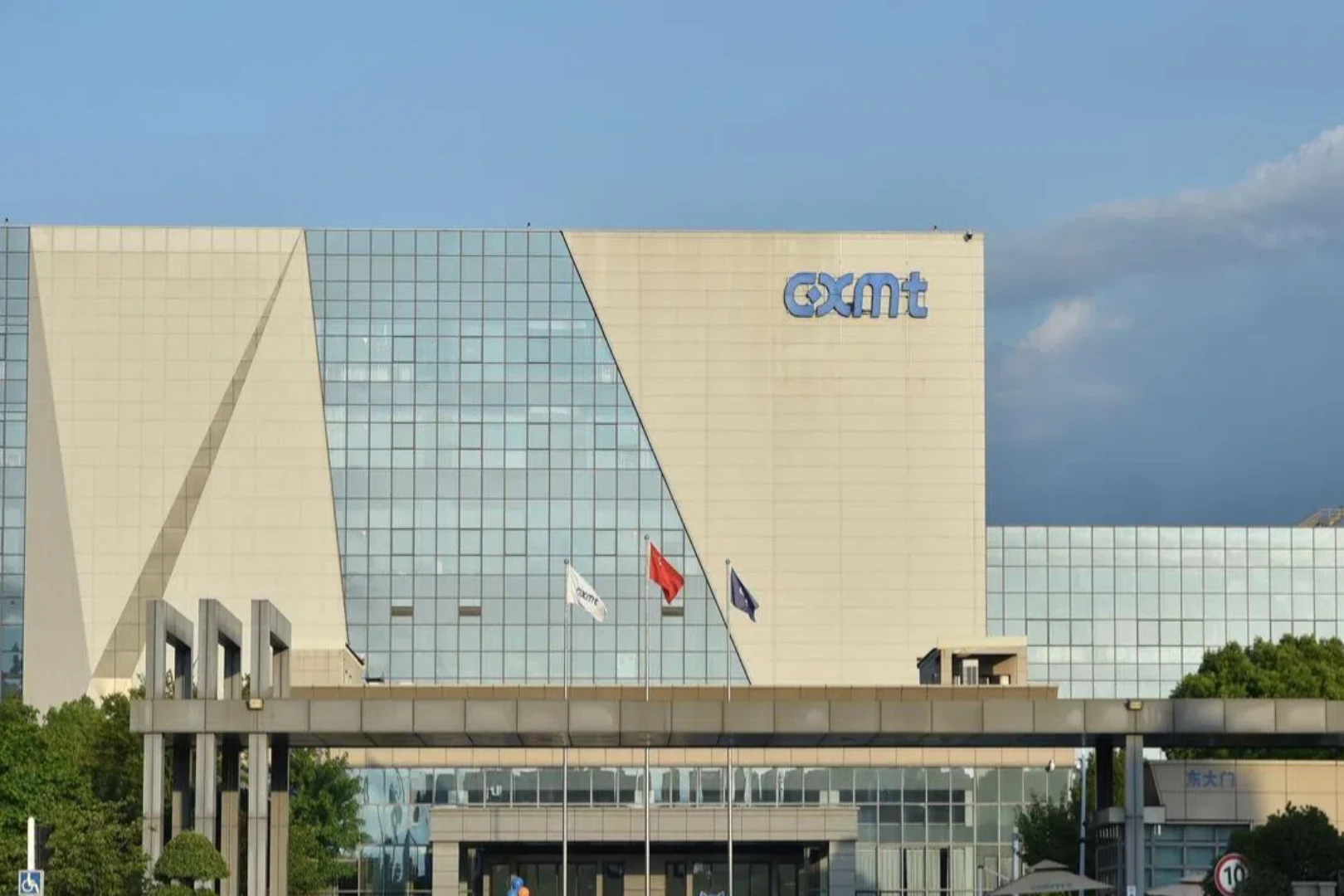
Changxin Memory’s market debut on Shanghai’s STAR Market on July 27, 2026, turned a long-running industrial bet by Hefei into one of the most discussed capital stories in China. The company opened at its RMB 8.66 offer price, surged more than 465% by the close, and finished its first day with a market capitalization of about RMB 3.3 trillion. On the following day, its valuation briefly climbed to RMB 3.66 trillion. That move sharply lifted the value of Hefei’s state-owned holdings. Based on the final ownership structure cited in the source article, Hefei’s state capital system was sitting on paper gains of more than RMB 1 trillion, built from cumulative investment of roughly RMB 26 billion to RMB 30 billion over nearly a decade. The article traces that outcome back to 2016, when Zhu Yiming pushed a DRAM industrialization plan that many places declined as too risky, while Hefei agreed to back the project. The report also links Changxin with an earlier BOE investment in 2008 to explain what is now widely called the “Hefei model”: using patient state capital to support strategically important industries through long loss-making cycles, then using the capital market to reprice those holdings. At the same time, the article argues the model is not easy to duplicate. It points to four factors behind Hefei’s result: unusual policy continuity, specialized state investment platforms, favorable timing tied to the AI-driven memory boom, and organizational discipline that many other cities have struggled to match.

690
Changxin’s IPO thrust Hefei’s state capital strategy into focus as paper gains topped RMB 1 trillion
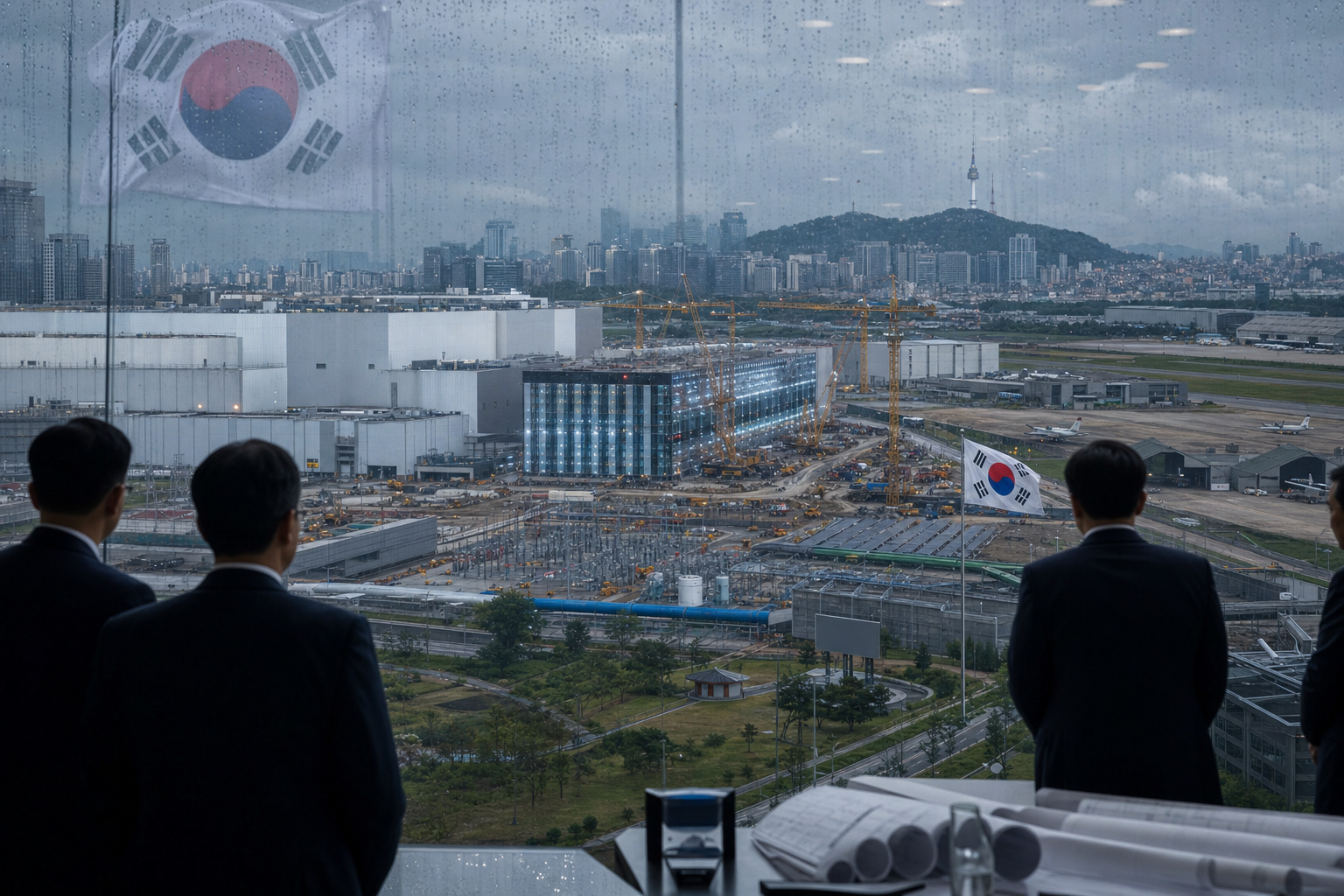
South Korea Plans Super Special Zone Act to Boost Semiconductors, Physical AI, AI Data Centers
Changxin Tech listing puts Hefei’s trillion-yuan paper gain in focus
US semiconduc
2026-07-29 00:49:10

US chip reshoring brings $770 billion in projects, but a 67,000-worker gap still looms by 2030

The US semiconductor buildout has become easy to measure in dollars and factory announcements. Since 2020, more than $770 billion in semiconductor supply-chain investment has been announced across 30 states and 160 projects, according to the Semiconductor Industry Association. The harder question is labor. In its 2026 State of the U.S. Semiconductor Industry report, SIA said the sector directly employs about 342,000 workers and supports nearly 2 million indirect and induced jobs, yet the industry could still face a shortage of roughly 67,000 technicians, engineers and computer-related professionals by 2030. That figure is not a count of currently vacant jobs. It comes from a 2023 projection model by SIA and Oxford Economics, which estimated that the industry would add about 115,000 jobs by 2030 and that around 67,000 of them could go unfilled under then-current graduation and labor-supply trends. The shortfall is spread across technicians, engineers and computer science roles, with training pipelines that look very different from one another. The article argues that the US response offers a policy lesson beyond subsidy size: workforce supply is being treated as part of semiconductor infrastructure. It also examines what that approach may mean for China, where new fabrication, packaging, materials and equipment projects are expanding faster than local talent systems in some regions can fully support.

2350
US chip reshoring brings $770 billion in projects, but a 67,000-worker gap still looms by 2030
CXMT’s STAR Market debut lifts valuation above $3.2 trillion yuan, handing Hefei a paper gain of more than 1.2 trillion yuan